

Table of Contents
- Understanding Everyday Carry (EDC) and What Makes a Good EDC Tool
- Core EDC Tool Features That Matter
-
How to Choose an EDC Tool for Your Daily Needs
- Step 1: Identify Your Most Common Tasks
- Step 2: Match the Tool to the Task, Not the Other Way Around
- Step 3: Set Your Carry Tolerance
- Step 4: Test Grip and One-Handed Operation
- Step 5: Check Legal and Workplace Restrictions
- Step 6: Weigh Material and Construction Quality
- Step 7: Decide on Blade Style and Replacement
- A Quick Decision Framework
- Everyday Carry Essentials: Building Your EDC Setup
- Durability and Construction: What Separates Quality from Hype
- EDC Tool Maintenance and Long-Term Ownership
- Frequently Asked Questions
Last Updated: October 12, 2026
Understanding Everyday Carry (EDC) and What Makes a Good EDC Tool
A good EDC tool handles your most frequent daily tasks without weighing you down or eating pocket space. At Gil-Tek, we engineer tools for exactly this: the best combine purposeful design, reliable materials, and genuine versatility.
Real EDC is about carrying what you actually use, not everything you might need.
What separates quality EDC from the noise is intentional engineering. According to the American National Standards Institute standards for hand tools, durability and safety mechanisms are non-negotiable in tool design, which is why locking mechanisms and material selection matter so much.
Below, we'll cover the features that genuinely matter and how to evaluate tools for your needs.
Core EDC Tool Features That Matter
Not all features deserve equal weight. Some sound impressive but rarely get used. Others are invisible until you need them. Understanding which is which saves you from buying tools that look good but don't perform.
Blade Quality and Cutting Performance
The blade is where EDC tools either deliver or disappoint. A quality blade holds an edge, cuts cleanly, and doesn't need constant resharpening.
Material matters. Stainless steel resists corrosion and needs less maintenance; high-carbon steel holds a sharper edge but demands more care.
The RUK-S from Gil-Tek uses standard utility blades, so you're never stuck with a dull edge.
Multi-Function Design and Versatility
A true multi-function tool does several things well, not ten things poorly. A bottle opener that never gets touched is wasted weight; a pry bar that handles light-duty tasks adds real value.
Versatility without bloat is the goal. The RUK V3 includes a pry bar for light-duty applications, a bottle opener, and a 1/4" hex driver slot for bits.

Locking Mechanisms and Safety
A blade that deploys smoothly is only half the equation. It needs to lock securely in both extended and retracted positions.
Safety also means ease of control. One-handed operation matters more than people expect: if you're holding something in one hand and need your tool in the other, a two-handed deployment isn't practical.
How to Choose an EDC Tool for Your Daily Needs
Choosing the right tool isn't about finding the "best" tool. It's about finding the best tool for what you actually do, where you carry it, and what you're allowed to carry there.
Step 1: Identify Your Most Common Tasks
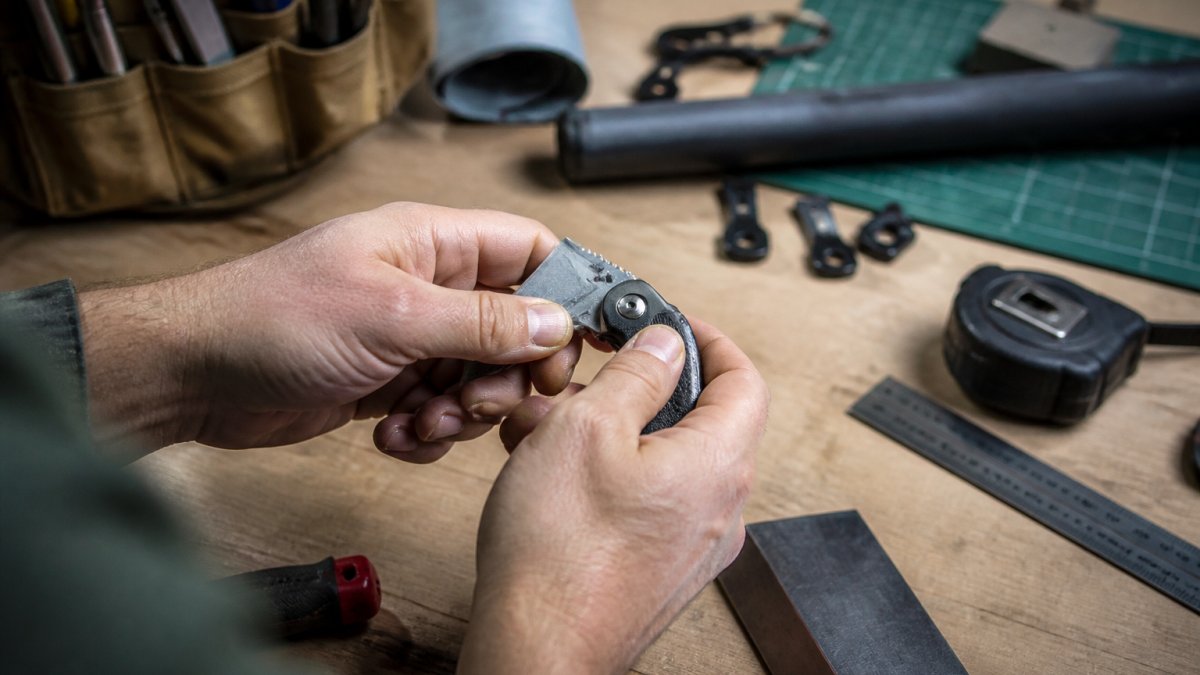
Spend a week noting what you reach for. Do you open packages daily? Cut cord or tape? Pry something open? Adjust screws? Write down the three to five tasks you do most often, and ignore hypothetical emergencies: you're buying for Tuesday afternoon, not a disaster scenario.
Step 2: Match the Tool to the Task, Not the Other Way Around
Once you have your task list, map each task to the minimum function that solves it:
- Opening boxes and packages → a short, sharp blade. A compact utility knife covers this better than a long folding blade because you get a fresh edge on demand and precise control.
- Cutting cord, tape, or zip ties → the same blade, plus a notch or hook if the tool has one.
- Light prying → a dedicated pry edge or flat tip. Using a blade tip for prying is how tips snap.
If a feature doesn't map to a task you perform, it's weight you're carrying for no reason.
Step 3: Set Your Carry Tolerance
This step determines whether the tool stays in your pocket. Carry tolerance is how much bulk and weight you're genuinely willing to feel all day.
Ask yourself:
- Where will it live? Front pocket, back pocket, belt, or bag. A tool that's comfortable in a bag may be miserable in a front pocket.
- How does it sit? A pocket clip that holds securely without shifting matters as much as the tool's dimensions. A clip that snags or rotates turns a good tool into an annoying one.
- What's your weight ceiling? Titanium is lighter and stronger than aluminum but costs more. Aluminum handles light duty well and costs less. The right choice depends on your budget and how much you're willing to spend.
A tool you don't carry isn't useful, no matter how capable it is on paper.
Step 4: Test Grip and One-Handed Operation
If possible, hold the tool before buying. Does it feel comfortable? Can you deploy the blade smoothly with one hand? Does it lock securely and feel like it will last?
One-handed operation deserves specific attention. Check the opening force: stiff enough to stay closed in a pocket, light enough to open without a fight.
Step 5: Check Legal and Workplace Restrictions
Before settling on a tool, confirm you can carry it where you live, work, and travel. Rules vary widely and change over time.
- State and local knife laws differ on blade length, locking mechanisms, and whether a tool can be carried openly or must be concealed. Some jurisdictions treat utility knives and folding knives differently.
- Federal buildings, courthouses, airports, and schools generally prohibit carrying knives and many multi-tools regardless of local law.
- Workplace policies may restrict what you can bring into an office, warehouse, or client site, even if the tool is legal to carry on the street.
Step 6: Weigh Material and Construction Quality
Material quality determines durability and maintenance requirements. CNC-machined tools hold tighter tolerances than stamped or cast tools, meaning less rattling, more reliable locking, and longer useful life.
Titanium, brass, and aluminum each have trade-offs. Titanium is the strongest and lightest but costs more. Brass offers a premium feel and patinas beautifully over time.
Step 7: Decide on Blade Style and Replacement
One decision that pays off over years of ownership is whether the blade is fixed or replaceable. A fixed blade can be sharpened but eventually wears down and requires skill to maintain. A replaceable utility blade swaps in a fresh edge in seconds, so for people mainly opening packages and cutting everyday materials, replaceable blades often win on convenience alone.
A Quick Decision Framework
To compress all of the above into a single pass, run through these questions:
- What are my three most frequent tasks? Write them down.
- What's the minimum tool that handles all three? Strip out everything else.
- Where will I carry it, and how much bulk will I tolerate? This sets your size and weight ceiling.
- Can I legally and practically carry it in the places I go most? If not, adjust.
- Does it open and lock one-handed, and does it fit my hand? If you can't test it in person, look for clear specs on opening force and lock type.
- Will I be able to maintain it easily? Replaceable blades and standard fasteners make long-term ownership simpler.
Answer those six questions honestly and you'll land on a tool that gets carried every day.
Everyday Carry Essentials: Building Your EDC Setup
A solid EDC setup starts with one reliable tool and builds from there. You need a blade for cutting, something for prying or adjusting, and ideally a bottle opener.
The RUK V3 handles blade work, light prying, and bottle opening in a single compact package. Gear that sits in a drawer isn't part of your everyday carry, it's just stuff you own.
Durability and Construction: What Separates Quality from Hype
Durability isn't a feature, it's the result of material selection and engineering discipline. A tool that feels solid, deploys smoothly, and locks securely today should do the same in five years.
CNC machining matters because it produces consistent tolerances, and material choice determines how well the tool resists wear and corrosion.
EDC Tool Maintenance and Long-Term Ownership
Most EDC guides stop at the point of purchase. That's a mistake, because the tool you carry daily is exposed to pocket lint, sweat, humidity, and whatever you cut, pry, or open. A short, repeatable maintenance routine separates a tool that still feels solid in five years from one that rattles, sticks, or rusts by year two.
A Simple Weekly Routine
You don't need a workbench. Five minutes a week covers the essentials:
- Wipe the blade and body. A dry microfiber cloth removes lint, tape residue, and moisture. If you've cut anything sticky or salty, wipe immediately.
- Check the lock and pivot. Open and close the tool slowly. Listen for grinding, feel for grit, and confirm the blade locks in both positions without play.
- Inspect fasteners. Screws on a daily-carry tool can loosen from vibration and pocket movement. A quick check with the correct driver prevents a screw from backing out and getting lost.
Lubrication Without Overdoing It
Moving parts need lubrication, but more is not better. Excess oil attracts dust and lint, which turns into a grinding paste inside the pivot. A single drop of light machine oil or food-safe lubricant on the pivot every few weeks, or after cleaning, is enough. Work the mechanism a few times, then wipe away any excess.
Corrosion Prevention by Material
How much care your tool needs depends on what it's made of:
- Titanium resists corrosion well and holds its finish with minimal attention. A wipe-down is usually all it needs.
- Anodized aluminum is durable in normal conditions, but deep scratches can expose bare metal. Keep the exposed area dry.
- Brass develops a patina over time. Some people love the look and do nothing; others polish it back to a shine. Either way, brass doesn't rust the way carbon steel does.
When to Replace Versus Repair
A well-built tool is usually repairable: loose screws can be tightened, pivots cleaned, and worn blades swapped. Replacement makes more sense when the frame is bent, the locking mechanism no longer engages reliably, or the body has cracked, structural failures, not maintenance issues.
Why This Matters for Ownership Cost
A tool that needs constant fussing is one you'll eventually stop carrying. The best everyday carry tools are designed so maintenance is quick, infrequent, and forgiving. Before buying, ask how easy it will be to clean, whether the blade is replaceable, and whether the fasteners are standard sizes you can service yourself.
Frequently Asked Questions
What makes a good everyday carry tool?
A good EDC tool combines reliability, compact size, and practical functionality. It should handle your most common daily tasks, opening boxes, cutting cord, light prying, without unnecessary bulk. Look for reinforced construction, a secure locking mechanism, and materials that resist corrosion. The best EDC tools feel natural in your hand, deploy easily one-handed, and remain accessible in a pocket or on a belt. Durability matters more than feature count; a tool you actually carry beats one loaded with functions you never use.
How do you choose an EDC tool that fits your carry style?
Start by listing the tasks you perform most often. If you open packages daily, blade quality and ease of deployment matter. If you prefer minimalist carry, weight and pocket space become priorities. Consider your environment: a corporate office may call for understated design, while field work demands robust construction. Test the tool's grip and one-handed operation. Evaluate materials, titanium offers lightweight strength, aluminum balances cost and durability, and brass adds weight for those who prefer substantial feel. Match the tool to your actual carry setup, not an idealized version.
What EDC tool features should you prioritize?
Prioritize a sharp, replaceable blade for cutting tasks; a secure locking mechanism that prevents accidental closure; and ergonomic grip that works one-handed. Multi-function tools add value if you use each function regularly, a bottle opener, pry bar, or driver bit can eliminate the need for a second tool. Easy access matters; a smooth deployment mechanism you can operate without thinking saves time and frustration. Avoid feature bloat; extra tools you never reach for only add weight and complexity. Build around the core functions you actually perform.
How do you maintain an EDC tool for long-term durability?
Remove and clean the blade regularly to prevent corrosion and debris buildup. Wipe down the handle and any moving parts with a dry cloth after use. For tools with locking mechanisms, apply a small amount of light oil to hinges or pivot points if they become stiff. Store in a dry environment; moisture accelerates rust, especially on steel components. Replace blades when they dull rather than forcing a worn blade through tough materials. Inspect the tool monthly for signs of wear or damage. Proper maintenance extends the life of your tool by years and ensures it performs reliably when you need it.
What's the difference between compact and full-size EDC tools?
Compact EDC tools prioritize pocketability and minimal weight, making them ideal for everyday carry without adding bulk. They excel at small, frequent tasks like opening boxes or cutting cord. Full-size tools offer more leverage, larger gripping surfaces, and sometimes additional features, but they demand more pocket space and weight. Most users find compact tools sufficient for daily needs; the convenience of always having them outweighs the extra capability of a larger alternative. Choose based on your typical tasks and how much space you're willing to dedicate to your EDC setup.
Are titanium or aluminum EDC tools worth the extra cost?
Material choice depends on your priorities. Aluminum offers excellent value, proven durability for everyday tasks, and lightweight performance at a lower cost. Titanium costs more but delivers superior strength-to-weight ratio and exceptional corrosion resistance, making it ideal for harsh environments or long-term ownership. Brass adds substantial weight and a premium aesthetic without improving function. For most daily users, quality aluminum construction delivers years of reliable service. Titanium becomes worthwhile if you demand maximum durability, prefer lightweight tools, or plan to carry the same tool for decades.
0 comments